

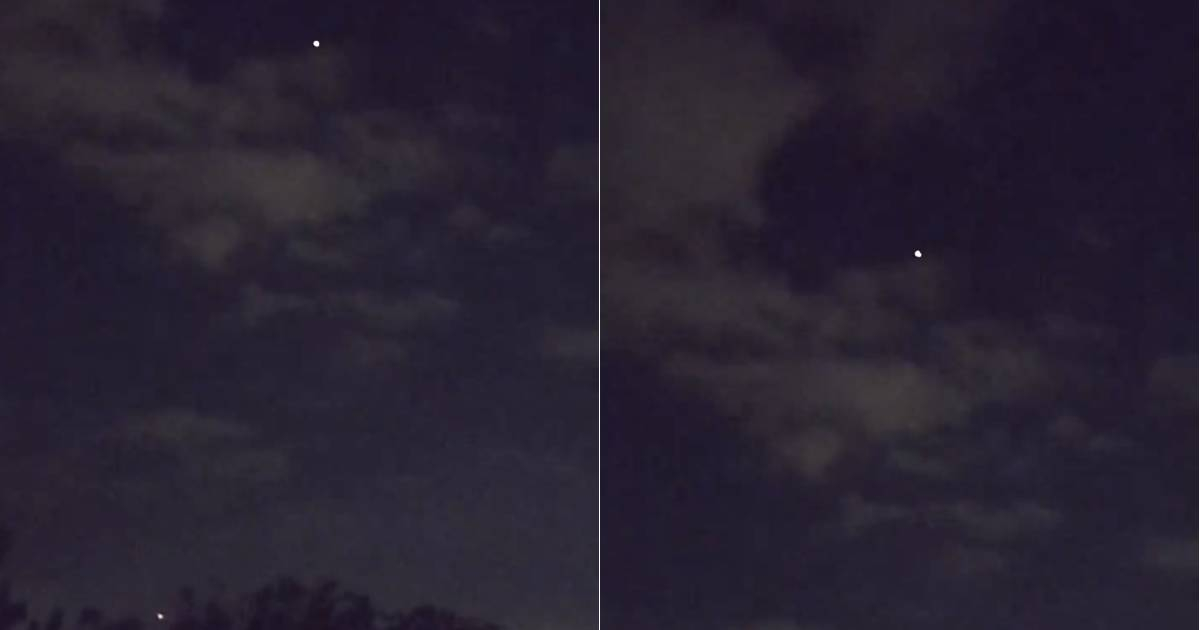

From Havana, the Cubans were able to capture the lights of the International Space Station as it passed over the island’s sky on the night of November 7.
At approximately 11:35 p.m., reports indicated that the station, operated by NASA, was within the coordinates of the Caribbean country.
Specifically, it was at latitude 23.2 north and longitude 82.3 west. The station passed at an altitude of 417 kilometers and at a speed of 27,590 kilometers per hour.
On Monday, residents of the west of the country saw lights in the sky that some attributed to unidentified flying objects (UFOs). But actually it was about Bright jet from a Falcon 9 rocketIt was launched from Florida to put 21 Starlink satellites into orbit.
One expert said that the lights seen in this case came from gases expelled by the rocket’s propelling engines, which, in the phase of their return to Earth - so as not to remain in orbit - leave a trail of light as they pass through the Earth’s atmosphere.
Private company SpaceX has launched a Falcon 9 rocket from Cape Canaveral to carry a new fleet of second-generation Starlink communications satellites into space, which will bring faster internet speeds to more users.
The launch took place from Space Launch Complex 40 (SLC-40) at Cape Canaveral Space Force Station in Florida at 6:13 pm local time (23:13 GMT).
After separation, the first stage of the Falcon 9 rocket returned to Earth 8 minutes after take-off and landed on the unmanned platform “A Shortfall of Gravitas” parked in the Atlantic Ocean.

“Proud web fanatic. Subtly charming twitter geek. Reader. Internet trailblazer. Music buff.”
More Stories
The guide so that no one can send messages in a WhatsApp group | Sports play
“WhatsApp will allow you to send audio messages that can be heard only once.” Daily menu
The Brick dust cloud is located at the center of our galaxy, and a new discovery may help reveal its secrets